KLAUS OTTMANN

KLAUS OTTMANN is a writer, translator, and chief curator emeritus of The Phillips Collection. In 2016, Dr. Ottmann was conferred the insignia of Chevalier of France’s Order of Arts and Letters by the French ministry of culture and communication. His publications include Yves Klein by Himself: His Life and Thought, The Genius Decision: The Extraordinary and the Postmodern Condition, and The Essential Mark Rothko. In 2006 he translated and edited Yves Klein's complete writings, Overcoming the Problematics of Art: The Writings of Yves Klein. In 2010 he edited and translated F. W. J. Schelling’s Philosophy and Religion (1804), followed by, in 2020, Schelling’s Philosophy of Revelation (1842–42) and Related Texts. In 2022 he translated the first part of Christian Wolff’s First Philosophy, or Ontology (1730).
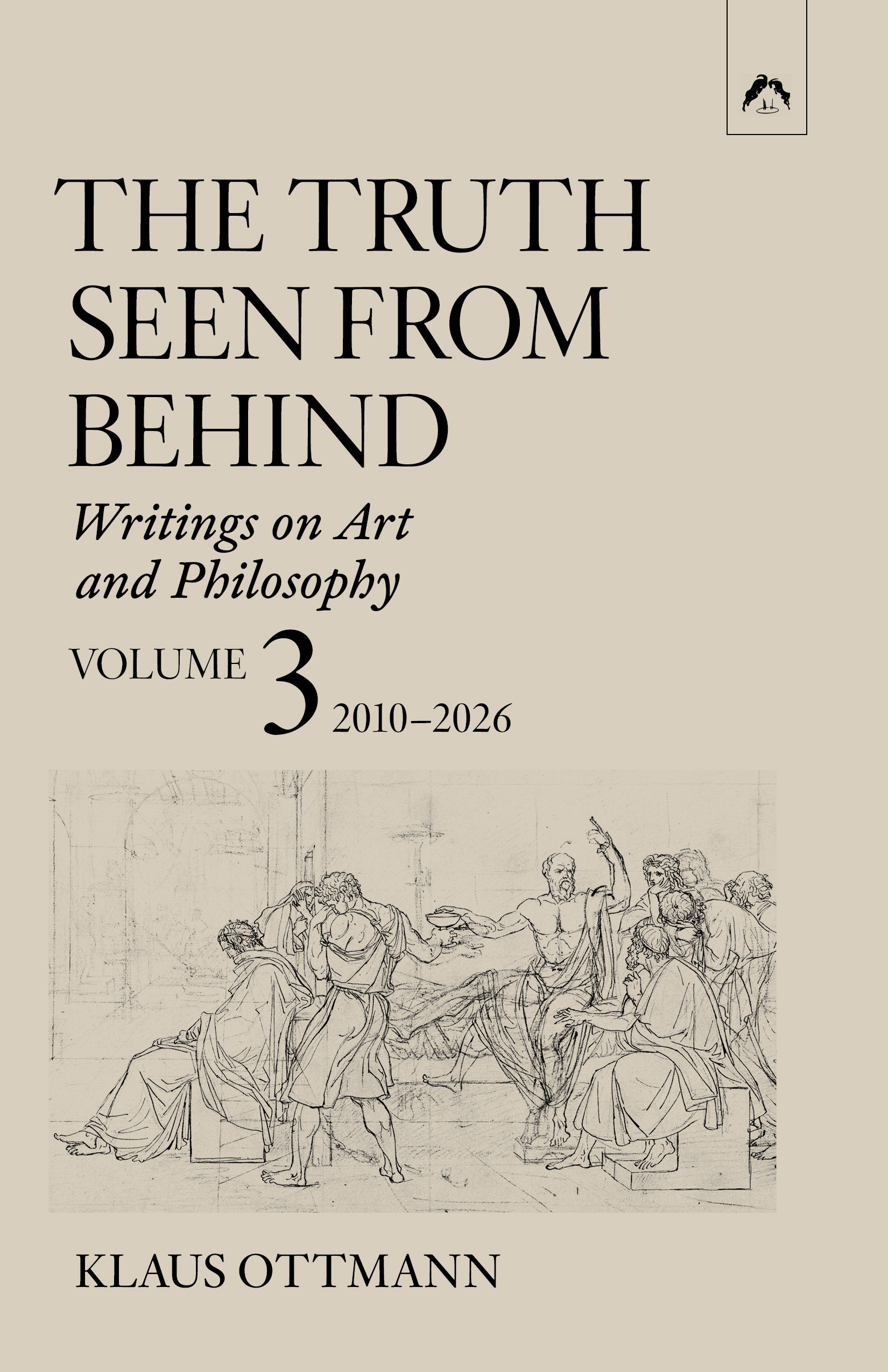
Book cover with Seurat's drawing of Poussin's hand

YOUR VERY HUMBLE AND VERY AFFECTIONATE SERVANT
The Letters of NICOLAS POUSSIN
1630–1665

translated, annotated, and with an introduction
by KLAUS OTTMANN
Hardcover, 536 pages, 89 color plates, $75
ISBN: 978-0-88214-191-6
e-book, $19.99
ISBN: 978-0-88214-192-3
The first complete collection of the letters of NICOLAS POUSSIN published in English translation.
In the mid-seventeenth century, NICOLAS POUSSIN changed the course of European painting and set the terms for subsequent generations of artists by bringing a new intellectual and poetical yet thoroughly “modern” methodology to art. His correspondence constitutes one of the rarest and most unique documents of Western art history. One hundred fourteen years after the publication of the first complete and rigorously prepared French edition of Poussin’s letters by CHARLES JOUANNY, most of his letters have until now remained untranslated; of those were translated, nearly all focus on his paintings or methodology. But there is much to be learned from the many letters that deal with seemingly mundane matters, such as running errands for his patrons, quarreling with collectors and patrons about money, and dealing with the challenging logistics of shipping artworks from Rome to Paris. Most of the  letters that survived were addressed to two patrons, both major collectors with connections to the cultural, intellectual, and political forces active in the seventeenth century: CASSIANO dal POZZO, arguably the most educated man in Rome who frequented the highest intellectual circles of Europe; and PAUL FRÉART de CHANTELOU, one of the most influential collectors and patrons of the arts in Paris. Poussin’s letters are filled with a sense of morality, loyalty, devotion, and even love toward these two men.
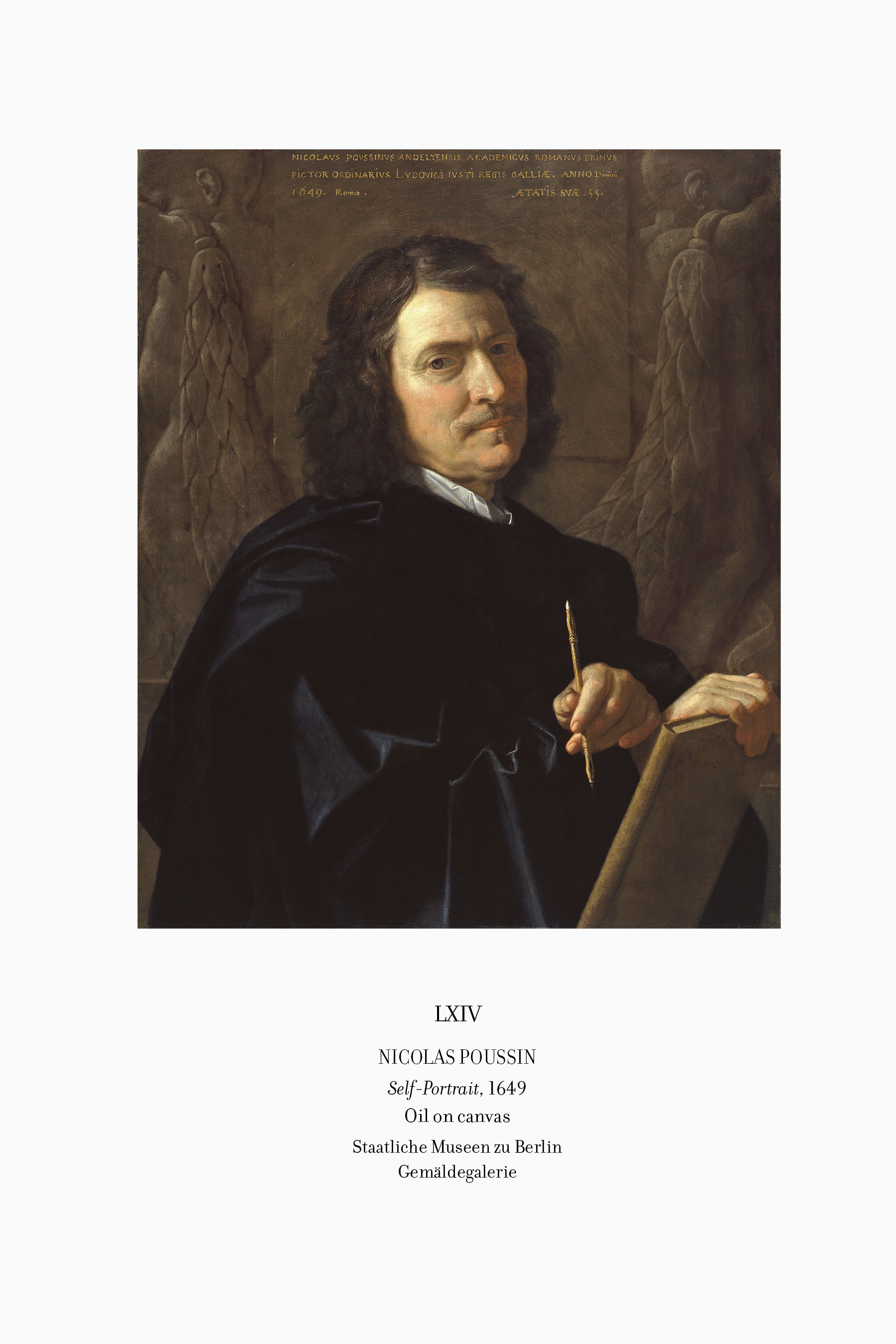
Page with Poussin's 1649 Self-Portrait
book cover image

OVERCOMING THE PROBLEMATICS OF ART
The Writings of YVES KLEIN

Translated and with an introduction
by KLAUS OTTMANN
Paperback original, 232 pages, ills., $22
ISBN: 978-0-88214-568-6
e-book, $9.99
ISBN: 978-0-88214-901-1
The first complete collection of the writings of the visionary French conceptual artist Yves Klein published in English translation.
 
Inherently fascinating, iconoclastic, thoughtful and thought-provoking, “Overcoming the Problematics of Art” is strongly recommended reading for those interested in the role and evolution of art with respect to social, cultural, and philosophical issues.
—MARY COWPER, The Midwest Book Review (November 2007)
It’s been a long time that I wanted this book translated. It’s a real masterpiece!
—SYLVÈRE LOTRINGER, Columbia University
 
cover for The Genius Decision

THE GENIUS DECISION
The Extraordinary and the Postmodern Condition

Paperback original, 216 pages, $22
ISBN: 978-0-88214-592-1
e-book, $9.99
ISBN: 978-0-88214-037-7
The Genius Decision is not an attempt at explaining or predicting genius. Nor is its goal to construct a concept or the concept of genius. Rather, the following should be considered as a horizon of conceptual events that constitute an philosophy of desire within the ethical-aesthetical writings of seven of Western philosophy’s most influential thinkers: Spinoza, Schelling, Kierkegaard, Nietzsche, Peirce, Wittgenstein, and Heidegger. This postmodern reevaluation of genius suggests that while there is no essentialist quality of genius, the postmodern artist can reach the Extraordinary by way of an active-passive Genius Decision, which is engaged in an activity of failure in its desire to represent the Nonrepresentable.
 
Ottmann convincingly argues, genius is simply not an innate essential quality. It involves action, risk and failure.
Lincoln Journal Star, January 23, 2005
 
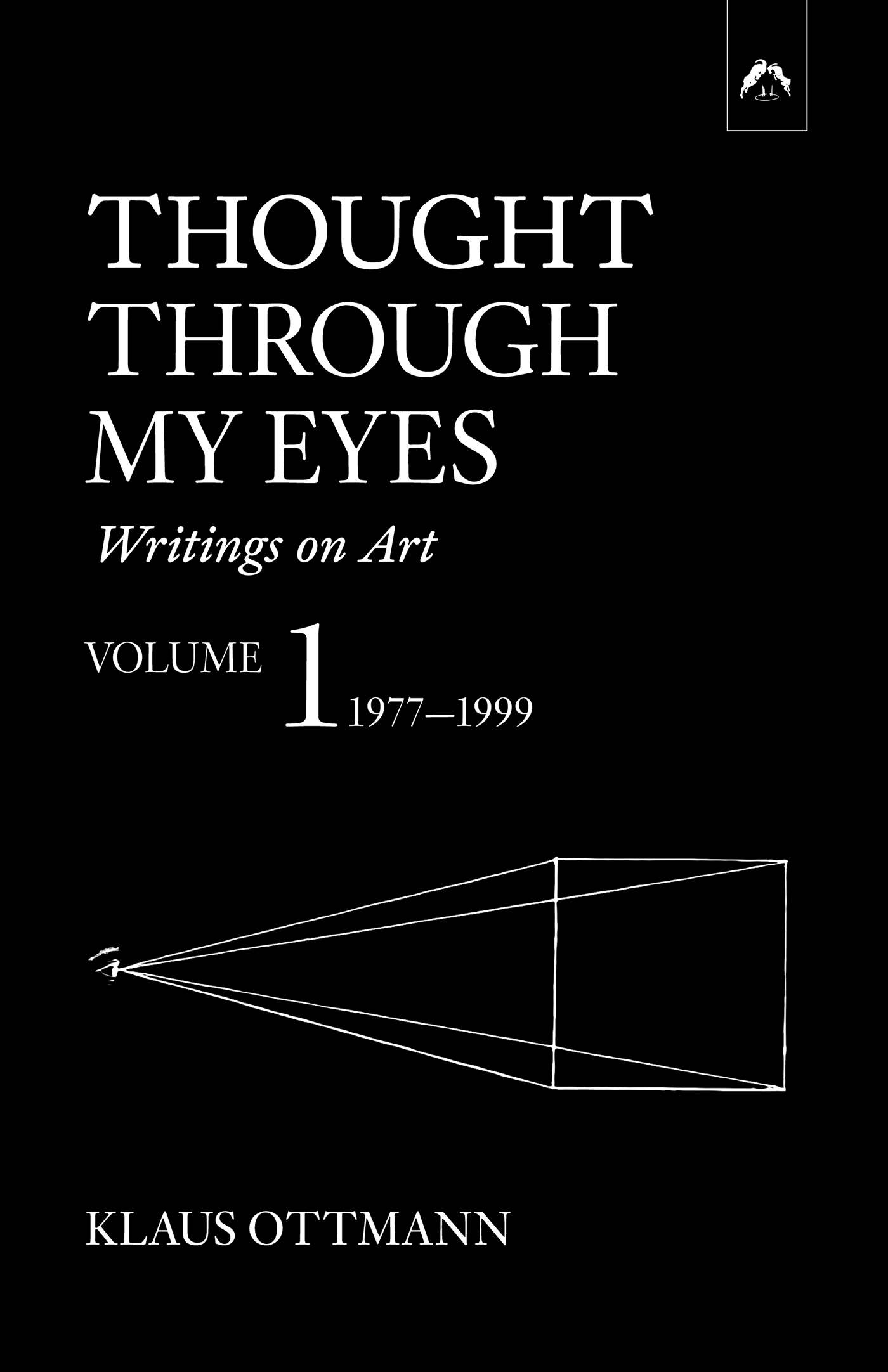
Book cover with diagram from Leon Battista Alberti’s Trattato della pittura

THOUGHT THROUGH MY EYES
Writings on Art, vol. 1: 1977–2005

Second, revised and expanded edition
with photographs by the author
Paperback original, 514 pages, ills., $25
ISBN: 978-0-88214-199-2
e-book, $9.99
ISBN: 978-0-88214-200-5
In the first volume of his Writings on Art, the acclaimed curator, translator, and author of The Genius Decision: The Extraordinary and the Postmodern Condition; Yves Klein by Himself: His Life and Thought; Wolfgang Laib: A Retrospective; Life, Love, and Death: The Work of James Lee Byars; Jennifer Bartlett & Pierre Bonnard: In and Out of the Garden; and The Essential Mark Rothko has gathered his innovative writings on art published between 1977 and 1999. Ottmann combines his background in philosophy with the creative ideas of contemporary artists, places art within a wide range of disciplines, including philosophy, literature, and science. Among the texts included are the essays “Painting in an Age of Anxiety,” “The Solid and the Fluid: Bartlett, Laib, Kiefer,” “The Spectacle of Chaos,” “The Reinvention of Painting,” “Heidegger, Beuys, and the Consequences”; exhibition reviews; and interviews with artists Joe Andoe, Ida Applebroog, Rainer Fetting, Günther Förg, Lydia Dona, Moira Dryer, Wolfgang Laib, Mary Kelly, Alain Kirili, Jeff Koons, A. R. Penck, Mimmo Rotella, Salomé, Richard Serra, Cary Smith, Mike and Doug Starn, and Jessica Stockholder.
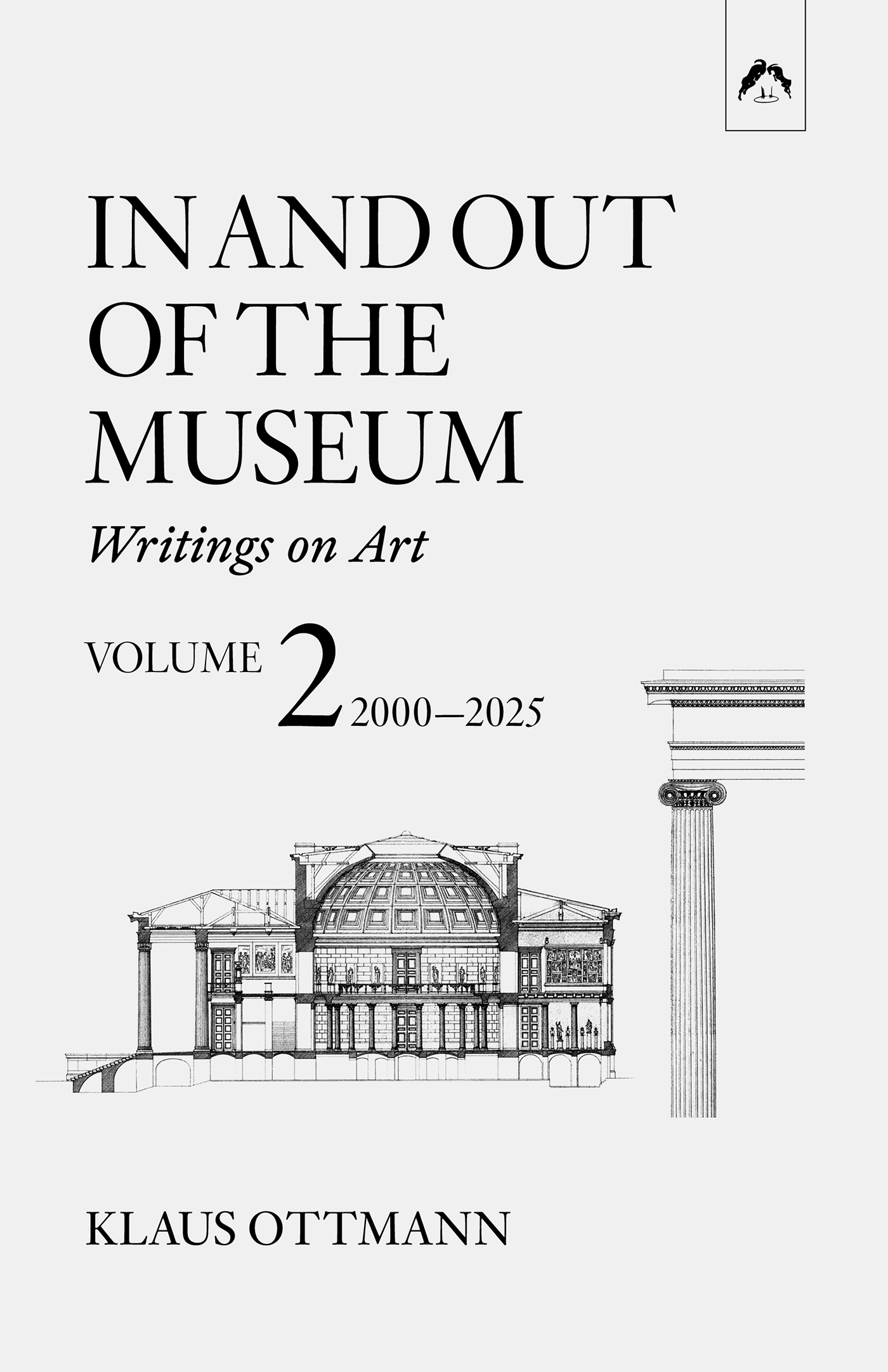
Book cover with Schinkel's drawing of the Alte Museum in Berlin

IN AND OUT OF THE MUSEUM
Writings on Art, vol. 2 : 2006–2025

First edition
(Winter 2025)
cover for Color Symbolism

COLOR SYMBOLISM
The Eranos Lectures

Edited by KLAUS OTTMANN
Paperback original, 336 pages, $26 USD
ISBN: 978-0-88214-554-9
e-book, $9.99
ISBN 978-0-88214-056-8
This revised and expanded edition includes, for the first time in English translation, Gershom Scholem’s paper on “Colors and their Symbolism in Jewish Tradition and Mysticism” and Henry Corbin’s paper on “The Realism and Symbolism of Colors in Shiite Cosmology.”
 
cover for Alchemy and Kabbalah

ALCHEMY AND KABBALAH
by GERSHOM SCHOLEM

Translated by KLAUS OTTMANN
Paperback original, 112 pages, $20
ISBN: 978-0-88214-566-2
e-book, $9.99
ISBN: 978-0-88214-599-0
A groundbreaking text on alchemy by the leading scholar of Jewish mysticism is presented here for the first time in English translation. Scholem looks critically at the connections between alchemy, the Jewish Kabbalah; its christianized varieties, such as the gold- and rosicrucian mysticisms, and the myth-based psychology of C. G. Jung, and uncovers forgotten alchemical roots embedded in the Kabbalah.
 
Skillfully translated from the original German …, Alchemy and Kabbalah is a classic text on alchemy by a leading scholar of Jewish mysticism, now available in English for the first time …. A serious-minded, in-depth metaphysical scrutiny, especially recommended for college-level students of Judaic theology.
—Oliver Norton, Midwest Book review
 
cover for Schelling’s Philosophy and Religion

PHILOSOPHY AND RELIGION
by F. W. J. SCHELLING

Translated, with an introduction
by KLAUS OTTMANN
Paperback original, 112 pages, $20
ISBN: 978-0-88214-593-8
e-book, $9.99
ISBN: 978-0-88214-591-4
For Schelling, Philosophy and Religion represented a new approach to the goal initially set in 1801 with his Representation of My System of Philosophy, the first system of philosophy he had conceived entirely on his own, after having seen “the light in philosophy,” which led him to philosophize, as it were, out of the Absolute itself: “All philosophizing begins, and has always begun, with the idea of the Absolute come alive.” In Philosophy and Religion, Schelling tackled the problem of the manifestation of the finite world and human freedom by evoking Plato and Spinoza, yet by his own admission he did not reach his goal “with complete determinateness” until 1809 when he published his Philosophical Investigations into the Essence of Human Freedom. Because it is the only work prior to the Philosophical Investigations that discusses the issue of freedom of will, it is regarded as a precursor to Schelling’s 1809 magnum opus on human freedom.
cover for Schelling’s Philosophy of Revelation

PHILOSOPHY OF REVELATION (1841–42)
and Related Texts
by F. W. J. SCHELLING

Edited, translated, and with an introduction
by KLAUS OTTMANN
Paperback original, 384 pages, $32
ISBN: 978-0-88214-066-7
e-book, $9.99
ISBN: 978-0-88214-080-3
The first complete translation into English language of the 1841-42 lectures on “Philosophy and Revelation” by the German idealist philosopher Friedrich Wilhelm Joseph Schelling (1775–1854), which until now have been largely neglected in the English-speaking world. Schelling’s “Philosophy of Revelation” was never published during his lifetime. The historically most significant 1841-42 lectures in Berlin exist only in transcriptions, which form the basis of this volume. Translated, edited, and annotated by Klaus Ottmann, Philosophy of Revelation (1841–42) and Related Texts pairs Schelling’s influential lectures with some of the philosopher’s earlier writings and lectures on the subject of philosophy and religion, such as his 1798 text on “Revelation and National Education”; his 1802 Jena lecture “On the Historical Construct of Christianity”; and his 1827 inaugural lecture in Munich.
 
cover for Wolff's Ontology

FIRST PHILOSOPHY, OR ONTOLOGY
Treated According to the Scientific Method,
Containing the Principles of All Human Cognition
(1730)

PART 1: §§ 1–78
Translated, annotated, and with an introduction
by KLAUS OTTMANN
Paperback original, 120 pages, $22
ISBN: 978-0-88214-968-4
e-book, $9.99
ISBN: 978-0-88214-969-1

The first English translation of Part 1 of Christian Wolff’s Philosophia prima, sive Ontologia (1730). Considered one of the seminal thinkers of the German Enlightenment—a group that included Gottfried Wilhelm Leibniz, Moses Mendelssohn, Gotthold Ephraim Lessing, and Immanuel Kant—Wolff exerted his influence on the German Enlightenment through his development of a rationalist system of knowledge in which all the propositions of science are demonstrated from first principles. By grounding metaphysics in mathematics, detangling it from the Scholastics’ focus on the supernatural (that which is beyond the physical), and making ontology the first philosophy—elevating it above metaphysics as a science that subsumes metaphysics (i.e., natural theology) as well as psychology and cosmology—he took the first significant steps towards a Philosophy of Enlightenment.