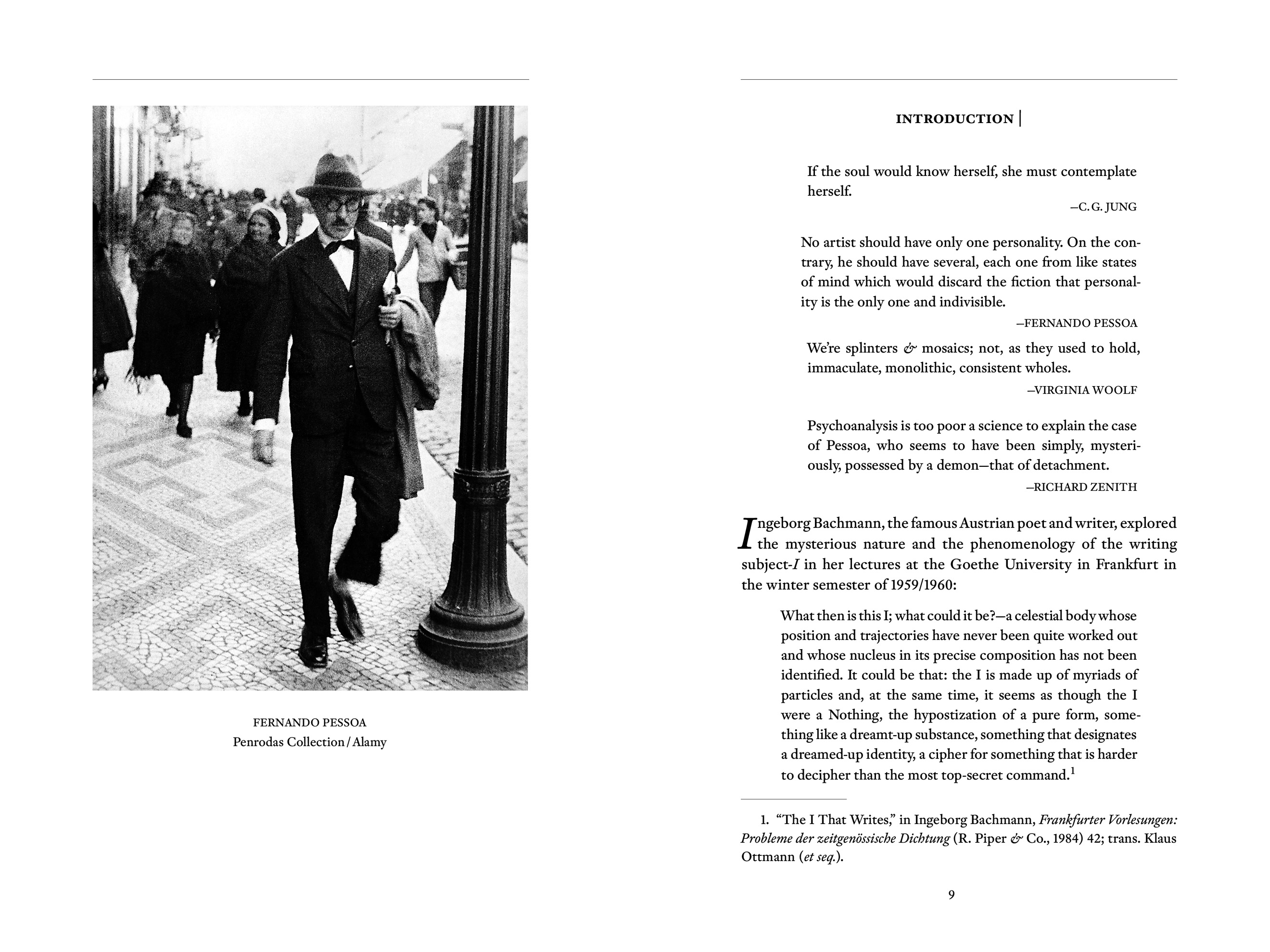
SYLVESTER WOJTKOWSKI
Sylvester Wojtkowski is a Jungian psychoanalyst in private practice in New York City. He is a founding member of the Jungian Psychoanalytic Association (JPA) where he is a seminar instructor, control analyst and supervisor. He is also the editorial board of Spring Publications. He teaches nationally and internationally on the subject archetypal psychology, imagination, and art. His publications include “Deconstructing the Monstrous” (2008); “Federico Fellini and the Giantess—Individuation of the Monster” (2017); “Dwelling Imaginally in Soulless Times: An Appreciation of the Work of James Hillman” (2018); and “‘It is not art’—Jung’s Red Book Paintings on the Background of Early Abstraction in Modern Art” (2019).
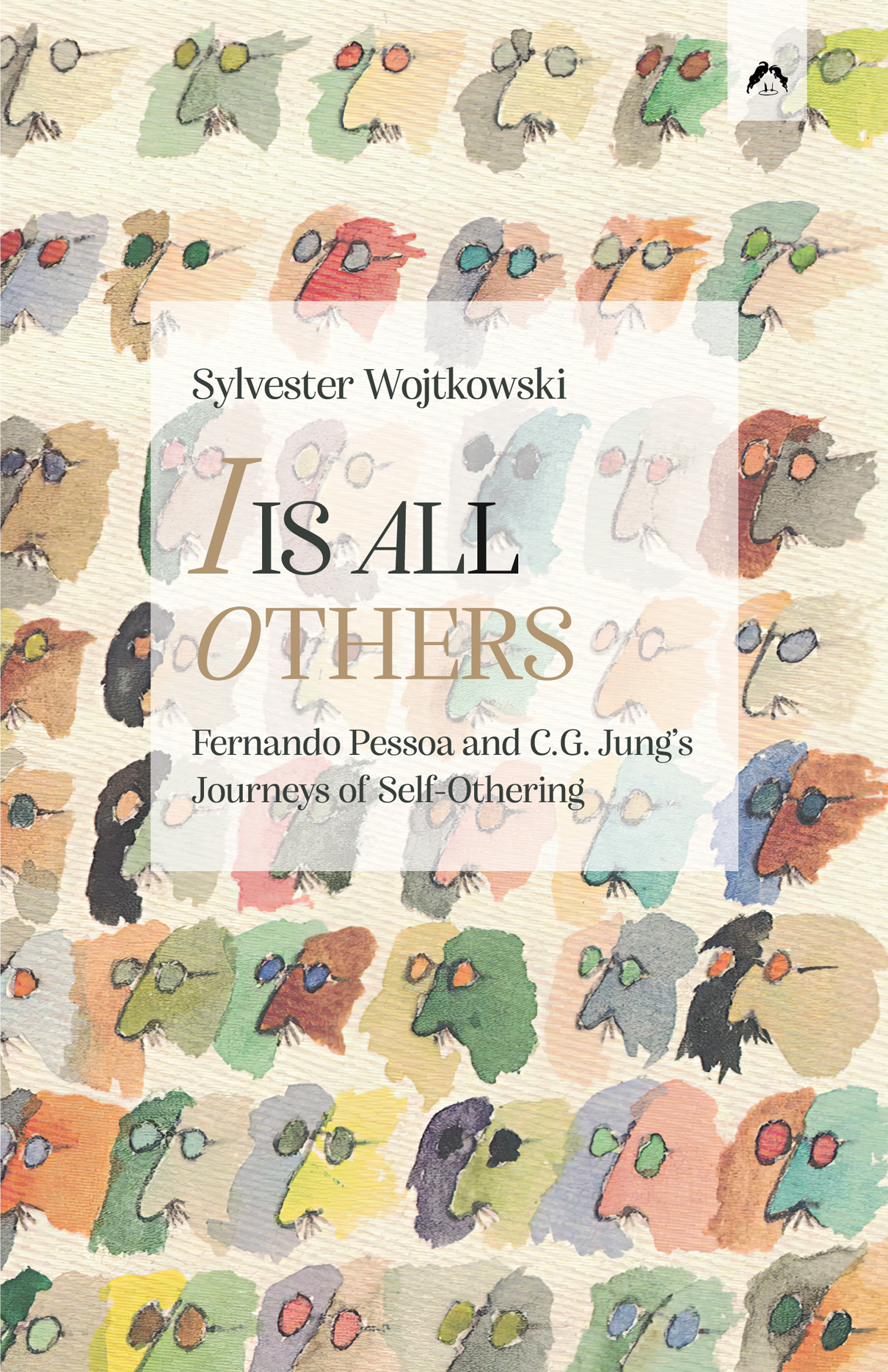
I IS ALL OTHERS
Fernando Pessoa’s and C.G. Jung’s
Journeys of Self-Othering
Paperback original, 562 pages, $28ISBN: 978-0-88214-230-2 E-book, $9.99
ISBN: 978-0-88214-231-9
Pessoa, well-regarded in Lisbon’s cultural milieu and its early twentieth century cafés, published very little during his lifetime. Nevertheless, he dedicated his life to writing, nurturing over a hundred heteronyms, with thirty of them having produced substantial bodies of work. The heteronyms included, among others, poets and writers, translators, occultists, political commentators, an astrologer, a banker, a psychiatrist, a wrestler, and a philosopher of paganism. Each of the heteronyms was autonomous, with a distinct personality and interests. Pessoa developed a conscious practice of experiencing many first-person “I”s by means of de-subjectifying and self-othering himself. His approach has influenced recent philosophical explorations of subjectivity and consciousness.
On the eve of World War I, in Switzerland, C.G. Jung began his search for the soul, encountering many inner persons, recording dialogues with them in his Black Books. Concurrently, in Portugal, Fernando Pessoa had his triumphal day when his poetic master, Alberto Caiero, and two his two disciples, Álvaro de Campos and Ricardo Reis, appeared to him and wrote magnificent poetry. Pessoa actualized many autonomous “I”s in his consciousness. Jung recognized the multiplicity of autonomous subjects in the unconscious, and othered himself to dialogue with them. Jung’s imaginal confrontations led to the creation of the illustrated manuscript of his Red Book and the development of his depth psychology project. Jung’s Red Book was published fifty years after his death. Pessoa left a trunk with thirty thousand documents that are still being archived and his unknown works are issued every year.